


Key Takeaways
- Rapid prototyping helps startups validate ideas early, reducing development risks while accelerating product launches and market readiness.
- Early user feedback enables businesses to refine features strategically, improving customer satisfaction and increasing adoption rates.
- Startups leveraging rapid prototyping can minimize costly rework, optimize resources effectively, and strengthen product-market fit.
- Continuous testing and iteration support faster decision-making, helping teams respond quickly to changing customer expectations.
- Prototyping enhances stakeholder alignment and investor confidence by demonstrating validated concepts before significant development investments.
Startups use rapid prototyping to validate ideas quickly, reduce development risks, and accelerate product launches. Instead of spending months building a product based on assumptions, founders can test concepts, gather user feedback, and refine solutions before investing significant time and resources.
In today’s highly competitive digital economy, speed has become a strategic advantage. Whether launching a SaaS platform, AI-powered solution, fintech application, or mobile product, businesses must balance innovation with efficiency. This is where the benefits of rapid prototyping become increasingly valuable. By validating concepts early, startups can make smarter decisions, reduce uncertainty, and improve their chances of achieving product-market fit.
Modern startups face immense pressure to deliver exceptional digital experiences while managing limited budgets and tight timelines. Product leaders can no longer afford lengthy development cycles that delay customer feedback. Organizations increasingly leverage software product development services to streamline validation, accelerate innovation, and improve product outcomes before full-scale development begins.
As customer expectations continue to evolve, businesses that embrace rapid prototyping gain a measurable competitive advantage. By leveraging rapid prototyping services to test ideas early and iterate continuously, companies can reduce costly mistakes, improve customer experiences, and bring market-ready solutions to users faster than ever before.
Table of Contents
What is Rapid Prototyping in a Startup?
Rapid prototyping is a product development approach that involves creating early versions of a product to validate ideas, functionality, and user experiences before development begins.
These prototypes may range from low-fidelity wireframes to highly interactive clickable experiences that simulate real-world functionality. The goal is not perfection but validation. Teams use prototypes to identify usability issues, gather stakeholder feedback, and refine concepts before investing heavily in engineering resources.
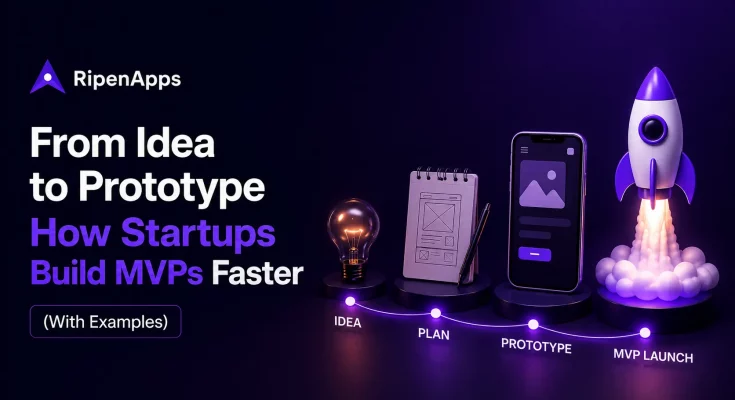
Understanding how rapid prototyping works is essential for startup founders and product leaders. The process typically involves idea generation, wireframing, user testing, feedback collection, iteration, and refinement. This structured rapid prototyping process helps organizations minimize risks while accelerating innovation.
Unlike traditional development models, rapid prototyping encourages continuous learning. Instead of building first and validating later, teams validate throughout the product journey, resulting in more efficient decision-making and stronger product outcomes.
Why Does Speed Matter So Much for Startups Today?
Startups operate in environments where timing can determine success or failure. Market opportunities evolve rapidly, customer expectations change frequently, and competitors continuously introduce new solutions.
For many organizations, delayed launches result in lost revenue opportunities and reduced market relevance. Investors also increasingly evaluate startups based on execution speed and validation capabilities. The ability to demonstrate traction and customer demand early can significantly impact fundraising outcomes.
This is why rapid prototyping for tech startups has become a strategic necessity. By reducing development uncertainty and accelerating validation cycles, startups can launch faster while maintaining confidence in their product decisions.
Organizations that move quickly are often better positioned to capture market share, attract customers, and establish themselves as industry leaders before competitors can respond.
According to McKinsey’s Digital Twins: The Key to Smart Product Development report, approximately $30 trillion in corporate revenues over the next five years will depend on products that have not yet reached the market, highlighting the massive economic pressure on companies to innovate faster and validate ideas earlier.
What Are the Key Benefits of Rapid Prototyping for Startups?
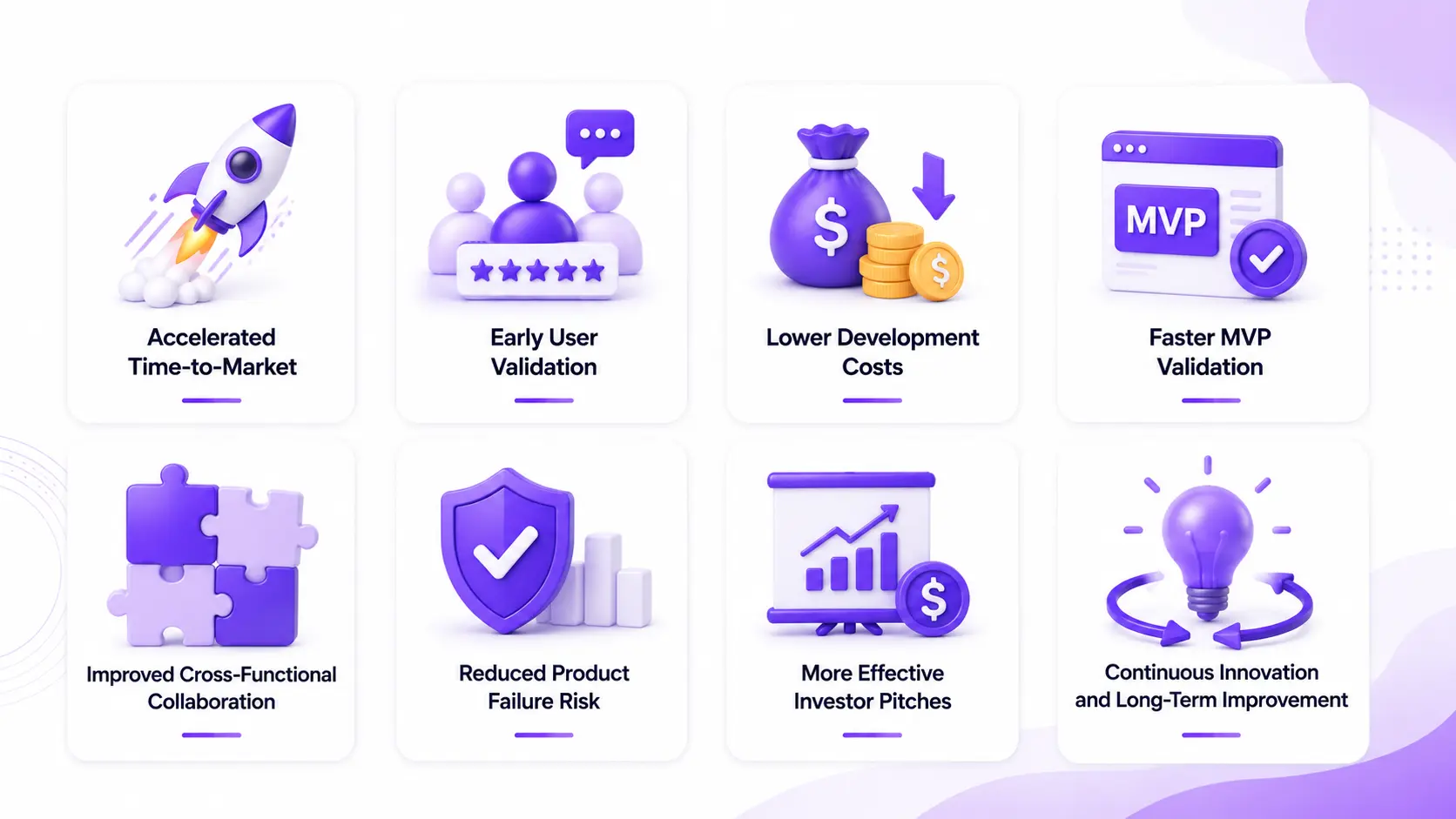
For startups, every product decision impacts budget, timelines, customer adoption, and long-term growth. Building a product without validation often leads to wasted resources, delayed launches, and costly pivots. This is why the benefits of rapid prototyping extend beyond design and development. By enabling early testing, continuous feedback, and data-driven decision-making, rapid prototyping helps startups reduce uncertainty, accelerate innovation, and launch products with greater confidence. Here are the advantages of rapid prototyping that make rapid prototyping an essential part of modern startup product development.
1. Accelerated Time-to-Market and Faster Product Launches
In today’s highly competitive digital landscape, being first to market can significantly influence customer acquisition and market share. Rapid prototyping enables startups to validate concepts, workflows, and features before investing in full-scale development, eliminating unnecessary delays caused by late-stage changes.
By shortening development cycles and reducing decision-making bottlenecks, startups can launch products faster, respond quickly to market opportunities, and establish a competitive advantage before competitors gain traction.
2. Early User Validation and Actionable Customer Insights
Many products fail not because of poor execution but because they solve the wrong problem. Rapid prototyping allows startups to engage potential users early and gather meaningful feedback before development begins. By observing how users interact with a prototype, teams can uncover pain points, identify unmet needs, and validate assumptions.
These insights enable businesses to make customer-centric decisions, improve user experiences, and build products that are more likely to achieve adoption and long-term success.
According to PwC’s 2025 Customer Experience Survey, 52% of consumers stopped buying from a brand after a bad experience with its products or services, while 29% left specifically due to poor customer experience (online or in-person). This highlights how quickly trust breaks in digital products, making early validation and prototyping critical for startup success.
3. Lower Development Costs Through Early Risk Identification
Product changes become increasingly expensive as development progresses. rapid prototyping process helps startups identify usability issues, workflow inefficiencies, and feature gaps during the earliest stages of product planning. Addressing these challenges before development significantly reduces rework, optimizes resource utilization, and prevents costly redesigns after launch.
For startups operating with limited budgets, this cost efficiency can make a substantial difference in achieving sustainable growth.
4. Faster MVP Validation and Smarter Investment Decisions
Launching a Minimum Viable Product without validation often leads to wasted development efforts and unnecessary financial risk. Rapid prototyping provides a practical way to test product concepts before allocating significant resources to development, helping businesses maximize the value of their MVP development services investments.
This allows founders and stakeholders to validate business assumptions, prioritize high-impact features, and assess market demand with greater confidence. As a result, organizations can make smarter investment decisions and focus resources on initiatives with the highest potential return.
5. Improved Cross-Functional Collaboration and Stakeholder Alignment
Product development often involves multiple stakeholders with different priorities and perspectives. Rapid prototypes act as a shared visual reference that aligns founders, designers, developers, investors, and business leaders around a common product vision.
By reducing ambiguity and improving communication, teams can make faster decisions, avoid misunderstandings, and maintain momentum throughout the development process. Stronger collaboration ultimately leads to more efficient execution and better product outcomes.
6. Reduced Product Failure Risk and Greater Business Confidence
Every product launch involves uncertainty, but rapid prototyping significantly reduces that uncertainty through early validation. By testing concepts, user journeys, and functionality before development begins, startups can identify weaknesses and make informed adjustments before major investments are made.
This proactive approach minimizes the likelihood of launching products that fail to meet customer expectations while giving stakeholders greater confidence in strategic product decisions.
7. More Effective Investor Pitches and Fundraising Opportunities
Investors are more likely to support startups that demonstrate clear market understanding and product validation. A prototype transforms an abstract idea into a tangible experience that investors can see, interact with, and evaluate.
It helps communicate the product vision more effectively while showcasing customer-centric thinking and execution readiness. By presenting validated concepts rather than assumptions, startups can strengthen investor confidence and improve their chances of securing funding.
8. Continuous Innovation and Long-Term Product Improvement
Successful digital products are never truly finished. Customer expectations, technology trends, and market dynamics continuously evolve, requiring organizations to innovate consistently.
Modern rapid prototyping methods enable startups to test new features, business models, and user experiences before implementation, reducing the risks associated with innovation. This culture of continuous experimentation allows companies to remain agile, adapt to changing market conditions, and maintain long-term competitive relevance.
How Do Startups Use Rapid Prototyping in Real-World Scenarios?
Startups across industries rely on prototyping to validate concepts, improve user experiences, and accelerate development.
Many organizations partner with experts offering product prototyping services to transform ideas into testable experiences before development begins.
- Mobile App Startups: Food delivery, health-tech, and social networking startups frequently test onboarding experiences, ordering workflows, and payment processes before launch.
- SaaS Startups: Software companies use prototypes to validate dashboards, reporting systems, workflow automation, and customer experiences.
- Healthcare Startups: Healthcare innovators test patient journeys, telemedicine experiences, and appointment scheduling workflows to improve usability and compliance.
- Fintech Startups: Financial technology products often require validation of onboarding experiences, transaction flows, and account management systems before development begins.
- AI Product Startups: Organizations building AI-powered products frequently rely on rapid prototyping techniques to test conversational interfaces, recommendation systems, and workflow automation concepts.
How Have Leading Apps Used Rapid Prototyping to Launch Faster?
The impact of rapid prototyping becomes most evident when examining how some of the world’s leading digital products achieved scale and market success. From global technology giants to high-growth startups, successful companies consistently use rapid prototyping to validate ideas, refine user experiences, and reduce development risks before investing in full-scale product development. These real-world examples demonstrate how early validation can accelerate innovation, improve product-market fit, and help businesses launch with greater confidence.
Airbnb Refined User Experiences Before Global Expansion
Before becoming one of the world’s largest accommodation marketplaces, Airbnb focused heavily on validating the user journey at every stage of the booking process. The company continuously tested property listings, search functionality, booking workflows, and trust-building features to understand how users interacted with the platform.
By gathering feedback early and making iterative improvements, Airbnb was able to reduce friction, improve conversion rates, and create a seamless customer experience. These rapid prototyping examples demonstrate how continuous validation can help startups build scalable products that meet evolving customer expectations while supporting long-term growth.
Uber Streamlined Transportation Through Continuous Testing
Uber revolutionized the transportation industry by simplifying how people request and pay for rides. However, achieving that simplicity required extensive testing and refinement. The company continuously experimented with ride-booking workflows, location tracking, payment systems, and driver-partner experiences to ensure every interaction was intuitive and efficient.
Through ongoing validation and user feedback, Uber optimized its platform before expanding into new markets. These practical examples of rapid prototyping highlight how iterative product development can accelerate adoption, improve customer satisfaction, and support rapid business scaling.
Spotify Enhanced Personalization Through Product Experimentation
Spotify’s success is largely driven by its ability to deliver highly personalized listening experiences. Before launching new recommendation engines, playlist features, and engagement tools, Spotify regularly tests concepts through prototypes and controlled user experiments.
This data-driven approach helps the company understand user preferences, identify improvement opportunities, and validate new experiences before full-scale deployment. By continuously experimenting and iterating, Spotify has been able to maintain high engagement levels while strengthening customer loyalty in an increasingly competitive streaming market.
Examarly Improved Digital Learning Experiences Through Early Validation
Examarly, an innovative e-learning platform developed by RipenApps, demonstrates how rapid prototyping can improve educational technology products before launch. The platform required a user-friendly experience that would keep learners engaged while simplifying course navigation and content consumption.
Through prototype testing, the product team validated learning journeys, user interactions, and engagement workflows before development scaled. This early validation process helped identify usability improvements, optimize the overall learning experience, and ensure the platform effectively addressed student needs from the outset.
Cotax Simplified Tax Filing Through User-Centric Prototyping
Tax filing is often perceived as a complicated and time-consuming process, making usability a critical success factor for digital tax solutions. Cotax, developed by RipenApps, leveraged rapid prototyping to simplify complex workflows and create a more intuitive user experience.
Before full-scale development, the team tested onboarding flows, tax submission processes, and information architecture to identify potential friction points. This user-centric approach enabled Cotax to streamline the filing experience, improve accessibility, and deliver a solution that made tax management easier and more efficient for users.
Critical Insights for Business Leaders
These examples demonstrate that rapid prototyping is not merely a design activity. It is a strategic business tool that accelerates innovation, improves customer experiences, and reduces development uncertainty.
How Does Rapid Prototyping Help Startups Reach Product-Market Fit Faster?
Achieving product-market fit requires a deep understanding of customer needs. Startups that validate ideas early gain valuable insights into user behaviors, expectations, and pain points.
Many organizations combine startup product development services with rapid validation frameworks to accelerate learning and improve decision-making.
Rather than building extensive feature sets based on assumptions, teams can focus on delivering solutions that address real customer problems.
This iterative approach supports:
- Faster validation cycles
- Better customer alignment
- Reduced feature waste
- Improved retention rates
- Higher customer satisfaction
As a result, startups can reach product-market fit faster while preserving resources and minimizing risk.
How Does Rapid Prototyping Compare to Traditional Product Development?
Organizations increasingly recognize that traditional development approaches often introduce unnecessary delays and risks.
Many leading product engineering services providers incorporate rapid prototyping into their workflows to improve efficiency and reduce costly rework.
| Factor | Rapid Prototyping | Traditional Development |
| Validation Speed | Fast | Slow |
| User Feedback | Early | Late |
| Risk | Lower | Higher |
| Flexibility | High | Limited |
| Development Cost | Lower | Higher |
| Time-to-Market | Faster | Slower |
This comparison highlights why rapid prototyping has become a preferred approach for startups seeking agility and innovation.
What Common Rapid Prototyping Mistakes Should Startups Avoid?
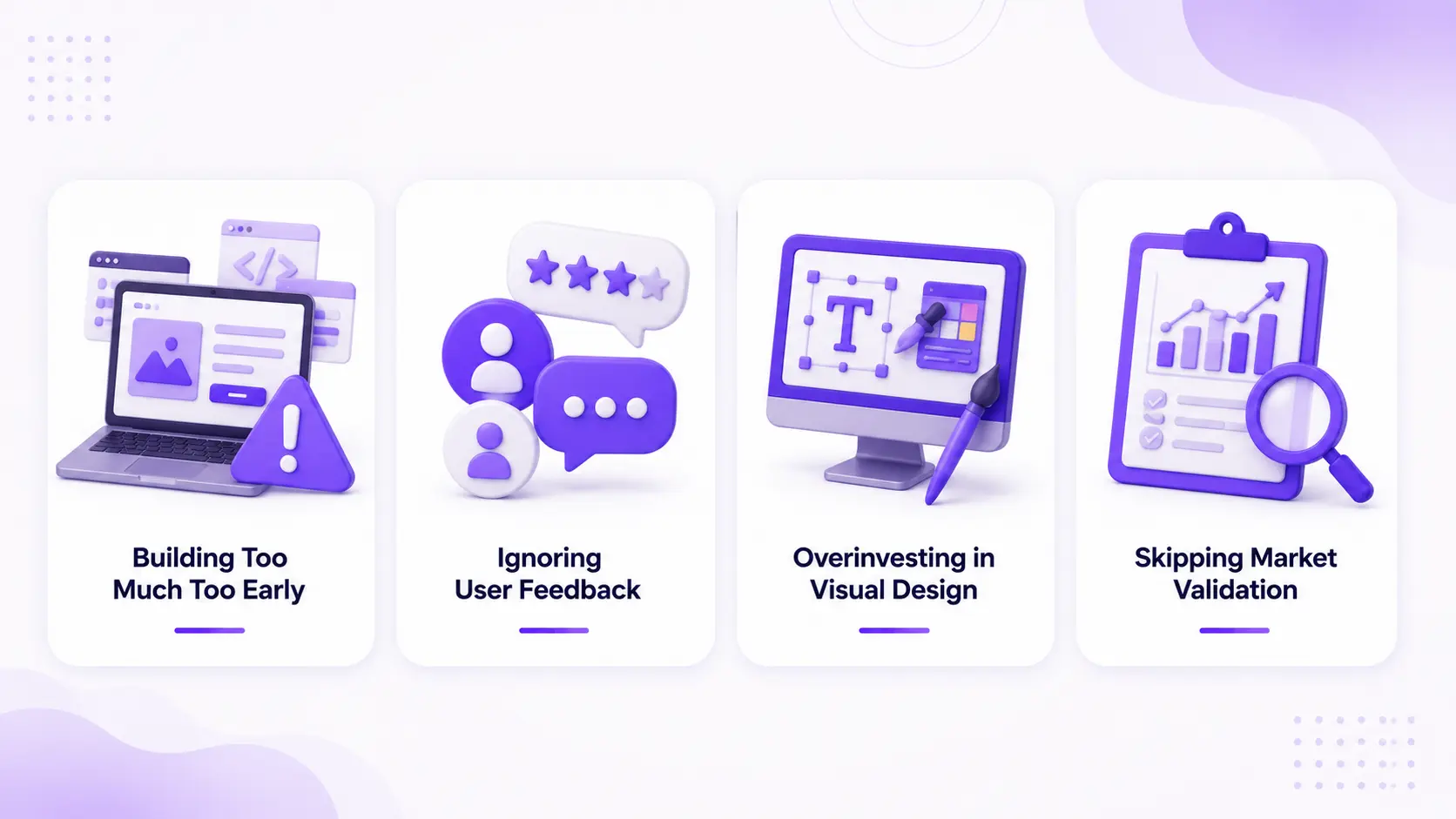
While rapid prototyping can significantly accelerate product development and reduce risks, its effectiveness depends on how it is implemented. Understanding and avoiding common prototyping mistakes can help startups maximize learning, improve validation outcomes, and make more informed product decisions before investing in full-scale development.
- Building Too Much Too Early: Prototypes should focus on learning rather than perfection.
- Ignoring User Feedback: Customer insights should directly influence product decisions and iterations.
- Overinvesting in Visual Design: Even experienced app design services teams understand that functionality and validation matter more than polished visuals during the prototyping stage.
- Skipping Market Validation: Prototypes should complement market research rather than replace it.
Final Thoughts
The benefits of rapid prototyping in product development extend far beyond faster development cycles. By enabling early validation, continuous feedback, and smarter decision-making, rapid prototyping empowers startups to reduce risks, improve customer experiences, and accelerate growth in increasingly competitive markets.
Whether you’re launching a SaaS platform, mobile application, AI-powered solution, or enterprise software product, partnering with an experienced team can significantly improve outcomes. RipenApps combines strategic prototyping and mvp development services to help organizations transform innovative ideas into scalable, market-ready digital products.

FAQ
1. Why is rapid prototyping in product development important?
Rapid prototyping helps businesses validate assumptions, gather customer feedback, accelerate innovation, and improve overall product quality while reducing costs.
2. How does rapid prototyping fit into a Product Development Life Cycle Guide?
Within a product development life cycle guide, rapid prototyping typically occurs during the concept validation and design stages, helping teams refine ideas before development begins.
3. How does rapid prototyping relate to PDLC vs SDLC?
When evaluating PDLC vs SDLC, rapid prototyping plays a significant role in both frameworks by supporting validation, iteration, and customer-centric development practices.
4. What are the key POC vs MVP vs Prototype Differences?
Understanding POC vs MVP vs Prototype Differences is essential for startups. A proof of concept validates technical feasibility, a prototype tests design and functionality, and an MVP delivers a usable product to real customers.

SHARE
WRITTEN BY

Prankur Haldiya
Chief Technical Officer
A tech innovator and engineering leader, Prankur Haldiya drives RipenApps’ product development strategy and oversees cutting-edge solutions in mobility, AI, and cloud ecosystems. He is passionate about building high-performance teams and helping brands launch secure, scalable, and user-centric digital products.
View All Articles




 India
India USA
USA Australia
 Canada
 UK
UK UAE
UAE